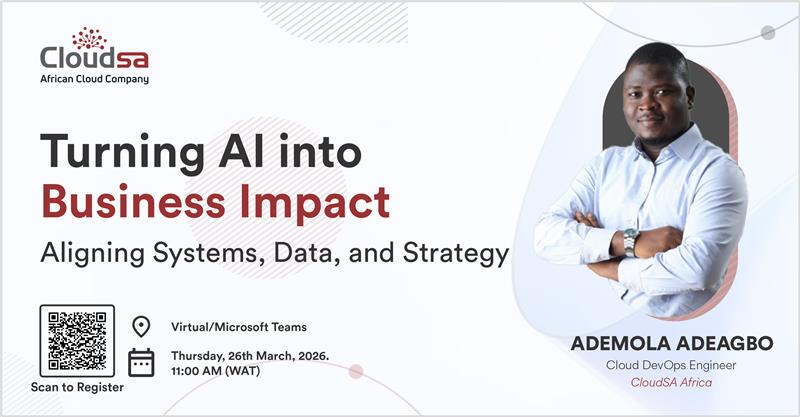
The AI landscape has shifted dramatically. What was experimental in 2025 has become essential in 2026. Business leaders are no longer asking “Should we adopt AI?” but rather “Which AI use cases will deliver the fastest ROI for our specific challenges?”
Yet despite the urgency, many organizations struggle to move beyond the hype. They’re overwhelmed by options, unsure where to start, and skeptical about promised returns.
The gap between AI’s potential and practical implementation remains frustratingly wide for most companies. In this Article, we identified five AI use cases that are delivering measurable business growth
Why AI Implementation Matters More Than Ever in 2026
AI has moved firmly into everyday business operations. Microsoft reports that over 90 % of Fortune 500 companies now use Microsoft Copilot, showing how quickly AI has become embedded in core workflows rather than tested at the edges. For many organizations, AI is now tied directly to productivity, decision-making, and operational efficiency.
The focus in 2026 is no longer adoption, but execution. Gartner projects that by 2026, 40 % of enterprise applications will include AI-driven capabilities, up from less than 5 % just a few years earlier. Businesses that implement AI effectively are pulling ahead, while those that delay are struggling to keep pace.
Use Case 1: AI-Powered Customer Service and Support Automation
AI-powered customer service helps businesses manage growing support demand with more speed and consistency. Microsoft reports that AI-assisted support improves response times and agent efficiency by handling repetitive queries and intelligent routing. This allows human agents to focus on complex and sensitive customer issues.
The value lies in scale, not replacement. Gartner expects a significant share of routine customer interactions to be AI-assisted by 2026, driven by the need for 24/7 support and cost control. For growing businesses, this approach improves customer experience while keeping support operations sustainable.
Use Case 2: Intelligent Sales Forecasting and Pipeline Management
AI improves sales forecasting by analyzing historical deals, pipeline behavior, and buyer signals in real time. This reduces reliance on gut feeling and static spreadsheets.
Accurate forecasts depend heavily on clean CRM data and disciplined sales processes.
McKinsey reports that AI-driven sales analytics can improve forecast accuracy by 10–20%. Better visibility helps leaders plan revenue, hiring, and cash flow with confidence.
Sales teams also benefit from clearer prioritization and shorter sales cycles.
Use Case 3: Automated Content Creation and Marketing Optimization
AI supports content ideation, drafting, personalization, and performance optimization across channels.
It enables teams to produce more targeted content without proportionally increasing effort.
Human oversight remains critical for quality, compliance, and brand consistency.
Boston Consulting Group estimates that AI-enabled marketing can increase productivity by up to 30%.
Personalized content driven by AI also improves engagement and conversion rates.
The biggest gains come when AI is embedded into existing marketing workflows.
Use Case 4: AI-Driven Business Intelligence and Data Analysis
AI and advanced analytics help organizations generate insights faster by processing large volumes of data in near real time. Microsoft’s business performance analytics tools unify data across systems to provide near-real-time insights that help teams act quickly on performance and operational trends. These capabilities shorten the time between analysis and action, enabling leaders to make more informed decisions under pressure while teams spend less time preparing reports and more time acting on insights.
Use Case 5: Process Automation and Workflow Optimization
AI automates repetitive, rules-based processes across finance, HR, procurement, and operations.
When combined with workflow tools, automation spans entire processes, not isolated tasks.
This reduces errors, delays, and operational bottlenecks.
Bain & Company reports that intelligent automation can reduce operational costs by 20–30%.
The most successful implementations focus on end-to-end workflows.
Automation delivers the greatest value when tied directly to business outcomes.
Related Article: Microsoft 365 Copilot ROI: What IT Leaders Must Know
How Business and IT Leaders Should Approach AI in 2026
Successful AI adoption starts with business problems, not tools. AI initiatives deliver stronger results when they are tied to clear outcomes such as revenue growth, cost reduction, risk management, or customer experience. Research consistently shows that organizations that link AI directly to business strategy are far more likely to achieve measurable value than those that treat AI as a standalone technology project.
Execution discipline is equally critical. Many AI initiatives stall due to poor data quality, weak governance, and lack of cross-functional ownership. IT leaders are expected to focus on data readiness, security, and integration, while business leaders ensure AI use cases are clearly prioritized, governed, and measured against defined KPIs.
AI should also be treated as a capability that evolves over time, not a one-time deployment. Continuous improvement, workforce upskilling, and responsible AI practices play a major role in long-term success. Organizations that invest in people, processes, and governance alongside technology are the ones turning AI into sustained competitive advantage.
How Cloudsa Africa Helps Organizations Turn AI Into Business Value
At Cloudsa Africa, we help organizations move AI from strategy to execution using proven Microsoft technologies such as Azure AI and Microsoft 365 Copilot. We work closely with business and IT leaders to identify high-impact use cases, prepare data and cloud environments, and integrate AI capabilities into everyday workflows across the organization.
Our approach covers the full AI lifecycle, from building AI-ready data platforms to deploying secure, governed solutions. Whether it is enabling intelligent analytics with Azure AI or improving productivity through Microsoft 365 Copilot, we focus on scalable implementations aligned with real business goals.
Ready to get started?
Talk to us about how we can support your AI journey and help your organization achieve measurable results.
Related Article: How Microsoft 365 Copilot Drives Up to 353% ROI for Small and Medium Businesses