Businesses across Africa and beyond are moving their operations to the cloud at a remarkable pace. Cloud computing has made it possible to store data, run applications, and collaborate across teams without the constraints of physical infrastructure. But as cloud adoption grows, so do the security questions that come with it.
What exactly is cloud security? What are the risks? And what should your business be doing to protect its data? This guide breaks it all down.
Work with a Cloud Solutions Provider you can trust
What Is Cloud Security?
Cloud security refers to the combination of policies, technologies, and controls put in place to protect data, applications, and infrastructure within a cloud environment. It is not a single tool, it is a layered approach to ensuring that everything stored or transmitted through cloud services remains safe from unauthorised access, manipulation, or loss.
Cloud security in cloud computing is built around three core objectives: confidentiality (ensuring only authorised users can access data), integrity (ensuring data is not altered without permission), and availability (ensuring systems and data are accessible when needed).
Unlike traditional on-premise security, cloud-based environments store data outside an organisation’s physical walls. This changes the threat landscape and the controls required to address it.
Types of Cloud Security
- Cloud Data Security Protects cloud data from unauthorised access or destruction through encryption, access controls, and data loss prevention mechanisms.
- Cloud Network Security Secures the network infrastructure connecting cloud systems and users, defending against malware, phishing, and unauthorised access.
- Identity and Access Management (IAM) Controls who can access what within a cloud environment through multi-factor authentication, role-based access control, and least privilege principles.
- Compliance and Governance Ensures cloud operations align with relevant regulations, internal policies, and data privacy requirements.
Common Cloud Security Risks
Understanding the threats is as important as knowing the solutions. The most common cloud security risks include:
- Misconfigured cloud infrastructure: one of the leading causes of cloud data breaches
- Weak or compromised credentials: stolen login details remain a primary entry point for attackers
- Insider threats: internal users with access to cloud systems can pose significant risk
- Insecure APIs and integrations: poorly secured connections create exploitable vulnerabilities
- Inadequate data loss prevention: without DLP controls, sensitive data can be exposed or permanently lost
- Lack of visibility: businesses that cannot see activity across their cloud environment cannot respond in time
Cloud Security Best Practices
1. Enforce Strong Cloud Access Control Implement multi-factor authentication and role-based access control across all cloud accounts. Review permissions regularly and revoke access promptly when employees leave or change roles.
2. Encrypt Your Cloud Data Apply encryption to data both at rest and in transit. Even if data is accessed without authorisation, encryption ensures it cannot be read or used.
3. Conduct Regular Security Audits and Apply Updates Regular audits help identify gaps before they are exploited. Staying current with patches and updates closes the vulnerabilities attackers most commonly target.
4. Implement a Data Loss Prevention Strategy Classify sensitive data, monitor how it moves across your cloud environment, and set policies that prevent unauthorised sharing or exfiltration.
5. Monitor Your Cloud Environment Continuously Real-time visibility is essential. Continuous monitoring allows threats and configuration changes to be detected as they happen. Cloud security services and managed service providers can support this capability around the clock.
SATH Cloud: Leading Cloud Solutions Provider in Nigeria
Cloud security is not a one-time setup. It is an ongoing commitment at the heart of responsible cloud adoption. Whether you are running on a single cloud platform or managing a multi-cloud environment, the principles remain the same: protect your data, control access, monitor continuously, and have a plan for when things go wrong.
At SATH Cloud, we work with businesses across Nigeria and the broader African market to design, implement, and manage secure cloud environments. As a leading Microsoft solutions partner, we bring the expertise, tools, and hands-on support to help your organisation stay protected as it grows.
Ready to strengthen your cloud security? Contact us today to get started.
Get 1-month FREE subscription,
fill out the form below
Secure everything. Limit nothing. Be Fearless.
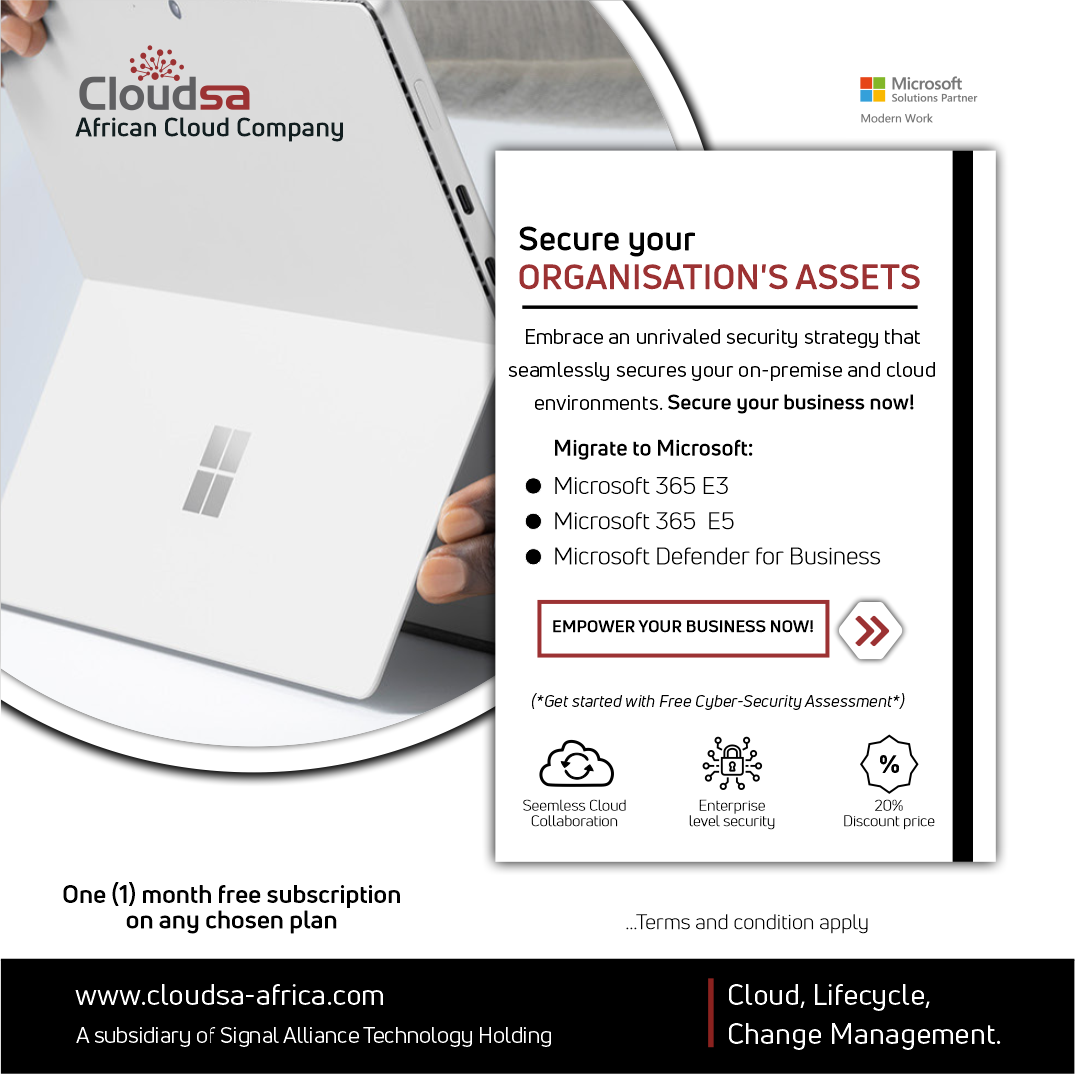
Staying up-to-speed with the changing security landscape is challenging, but not impossible. Discover the world’s most comprehensive approach to security solutions, designed to work seamlessly across platforms and cloud environments. Safeguard your people, data, and infrastructure while enjoying a 3x smoother workflow.
Revolutionize your security today with any of these Microsoft plans (Microsoft E3, Microsoft E5, M365 Business Plans, Microsoft Defender For Business) and get these amazing bonuses!
What you will Get :
Get a 1-month FREE Subscription.
Free Cybersecurity Assessment.
And 24/7 Premium Service Portal with any Microsoft solution purchase.